

How AWS Outages in the Middle East Are Driving Companies Toward Multi-Cloud with Kubernetes
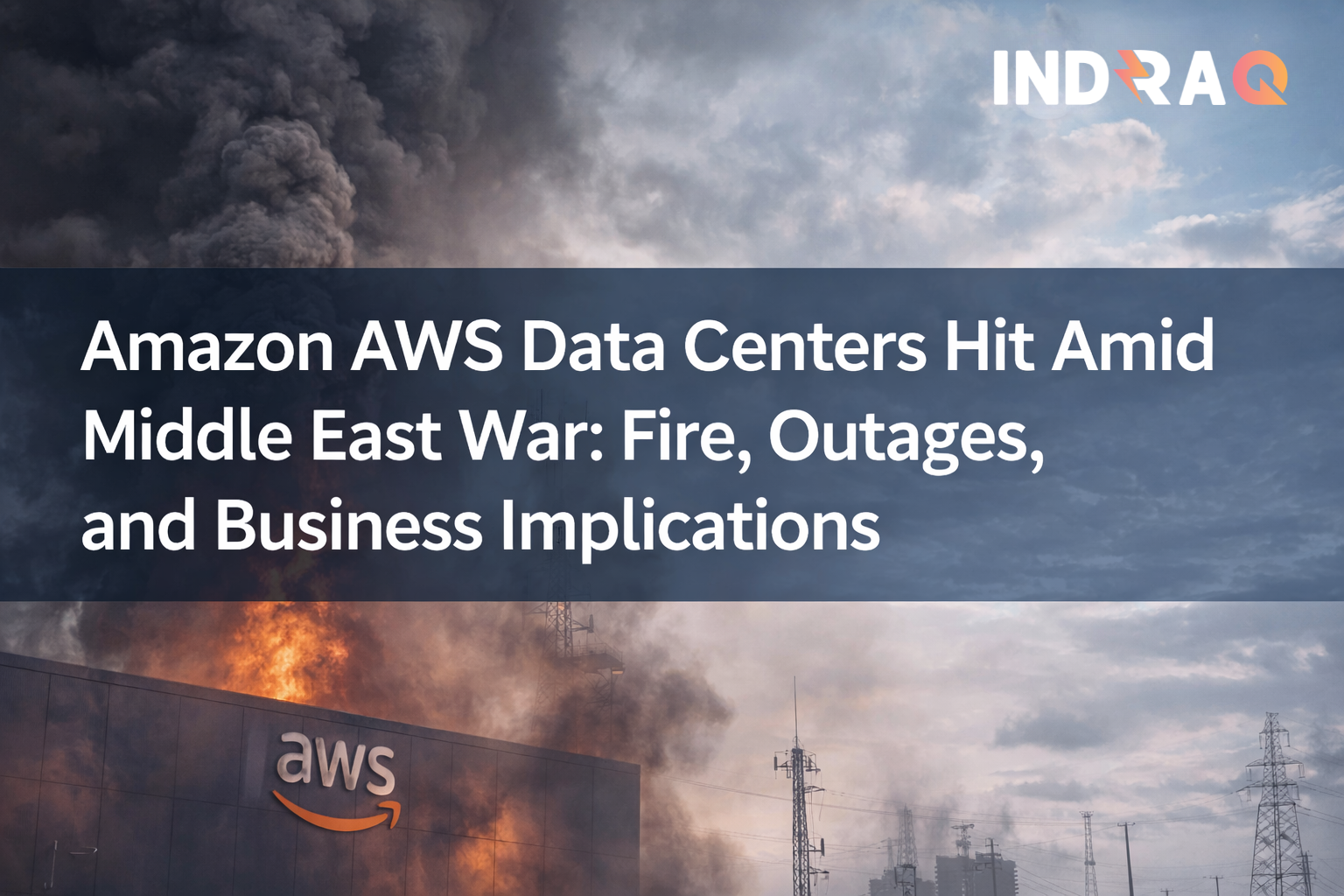
Excerpt / Introduction:
Recent AWS service disruptions and regional dependency concerns in the Middle East have pushed CTOs and business leaders to rethink cloud strategy. For organizations across finance, e-commerce, telecom, logistics, and public sector digital programs, downtime is no longer just an IT issue—it directly affects revenue, trust, and compliance. This is exactly why multi-cloud benefits are becoming central to enterprise planning. With Kubernetes multi-cloud architectures, companies can distribute workloads across AWS, Azure, and Google Cloud while improving cloud resilience and disaster recovery in cloud environments.
How AWS Outages in the Middle East Are Pushing CTOs Toward Multi-Cloud with Kubernetes
The Middle East has become one of the fastest-growing cloud markets in the world. From Saudi Arabia’s Vision 2030 initiatives to UAE smart city programs and Qatar’s digital infrastructure investments, cloud adoption is accelerating at an unprecedented pace.
But as organizations rushed toward hyperscalers, one issue became impossible to ignore: single-cloud dependency risk.
When AWS services in the region—especially around Bahrain and connected workloads serving UAE and Saudi users—experienced disruptions, many enterprises faced application slowdowns, service interruptions, delayed transactions, and customer support escalations. For CTOs, this wasn’t just a technical hiccup. It was a strategic warning.
The lesson? A resilient digital business in the Middle East can’t afford to rely on one cloud provider alone.
That’s where Kubernetes multi-cloud strategies enter the picture.
The Real Impact of AWS Middle East Outages on Businesses
AWS has invested heavily in the region, with Bahrain becoming a major hub for workloads serving GCC businesses. However, even highly reliable cloud platforms can face:
- regional network latency issues
- control plane disruptions
- storage service delays
- DNS resolution failures
- dependency chain outages
- cross-zone communication bottlenecks
For Middle Eastern enterprises, these incidents can create ripple effects far beyond IT.
Business-Level Consequences
For CTOs and business leaders, the risks include:
- Revenue loss: e-commerce checkout failures during peak shopping hours
- Customer churn: banking apps or fintech platforms becoming unavailable
- Regulatory exposure: downtime affecting compliance reporting or transaction records
- Brand damage: customers quickly lose trust in unreliable digital services
- Operational delays: logistics and supply chain systems depending on real-time APIs
A retail company in Dubai serving users across GCC markets, for example, may host its backend in AWS Bahrain. A regional AWS disruption could slow page loads, break payment services, and impact customer experience across multiple countries.
That’s why AWS Middle East outage scenarios have become a boardroom conversation, not just an infrastructure issue.
Why Single-Cloud Strategy Is Becoming a Strategic Risk
For years, many companies chose a “standardize on AWS” approach because it simplified procurement, talent hiring, and architecture decisions.
But in the Middle East, new realities are changing that thinking:
- stricter data sovereignty laws
- regional hosting mandates
- sector-specific regulations
- geopolitical risk management
- need for lower latency in local markets
- business continuity expectations
A single hyperscaler creates:
- Operational concentration risk
- Pricing leverage loss
- Vendor lock-in
- Limited disaster recovery choices
- Geographic dependency
This is where the multi-cloud benefits become impossible to ignore.
Why CTOs Are Moving Toward Multi-Cloud in the Middle East
A multi-cloud model means running applications, services, or failover systems across multiple providers such as:
- AWS Bahrain / UAE
- Microsoft Azure UAE / Qatar
- Google Cloud Doha and nearby regions
This architecture gives companies flexibility to choose the best provider for each workload.
Key Multi-Cloud Benefits
Here’s why regional enterprises are moving in this direction:
1) Higher Availability and Resilience
If AWS experiences a regional issue, critical services can fail over to Azure UAE or Google Cloud.
This dramatically improves cloud resilience, especially for:
- payment systems
- customer portals
- ERP workloads
- logistics APIs
- healthcare platforms
2) Better Regulatory Compliance
Some sectors require data residency in specific countries.
A multi-cloud strategy helps organizations place:
- customer data in UAE
- analytics in Qatar
- DR backups in Bahrain
- AI workloads in Saudi-hosted regions when available
3) Stronger Disaster Recovery in Cloud
Traditional disaster recovery often relied on a secondary AWS region.
But true disaster recovery in cloud becomes stronger when the secondary environment runs on a different provider entirely.
That reduces:
- provider-wide outage risk
- systemic service dependencies
- IAM control plane failure exposure
4) Commercial Negotiation Power
CTOs gain stronger vendor leverage when workloads can move between providers.
This helps optimize:
- compute pricing
- egress costs
- enterprise support contracts
- reserved capacity models
Why Kubernetes Is the Backbone of Multi-Cloud Strategy
Now here’s the big question: how do you avoid operational chaos across multiple clouds?
The answer is Kubernetes multi-cloud orchestration.
Kubernetes gives organizations a common control layer for containerized applications, making workloads portable across:
- Amazon EKS
- Azure AKS
- Google GKE
- on-prem OpenShift clusters
Instead of rewriting applications for each cloud, teams package services into containers and deploy them consistently.
Core Kubernetes Multi-Cloud Benefits
- workload portability
- standard deployment pipelines
- easier failover automation
- infrastructure abstraction
- policy consistency
- faster regional scaling
This is why Kubernetes is no longer just a DevOps tool—it’s a business continuity enabler.
Middle East Cloud Comparison: AWS vs Azure vs Google Cloud
For CTOs targeting regional users, provider diversity matters.
AWS
Best for:
- mature cloud-native ecosystems
- startup scalability
- strong partner network
- broad service portfolio
Azure
Strong choice for:
- enterprise Microsoft environments
- government and regulated sectors
- hybrid identity with Active Directory
- UAE enterprise adoption
Google Cloud
Excellent for:
- data analytics
- AI/ML workloads
- Kubernetes leadership
- modern digital-native teams
A practical Middle East strategy often looks like:
- production on AWS Bahrain
- DR on Azure UAE
- analytics on Google Cloud
- Kubernetes as the workload portability layer
That’s where the real multi-cloud benefits emerge.
Real Use Cases for Middle Eastern Enterprises
Banking and Fintech
Banks can run:
- customer APIs on AWS
- fraud detection ML on GCP
- backup transaction services on Azure
This reduces risk during an AWS Middle East outage.
E-Commerce
Retailers can split:
- frontend services across clouds
- payment gateways with active-active redundancy
- recommendation engines on GCP AI
Telecom
Telecom companies can place:
- OSS/BSS systems on Azure
- edge APIs on AWS
- observability on GCP
Government Digital Platforms
Public sector portals need high uptime and strict compliance.
A Kubernetes multi-cloud approach supports:
- local residency
- disaster recovery
- sovereign cloud alignment
- public service continuity
Challenges Companies Must Prepare For
Of course, multi-cloud isn’t magic.
CTOs must manage:
- cloud cost visibility
- cross-cloud networking
- IAM federation
- observability complexity
- skill gaps
- governance policies
The good news? Kubernetes, service mesh, GitOps, and policy-as-code tools reduce much of this complexity.
Popular supporting tools include:
- Istio
- ArgoCD
- Terraform
- Crossplane
- Prometheus
- Grafana
Useful external resources:
- Kubernetes: https://kubernetes.io/
- AWS Regional Services: https://aws.amazon.com/about-aws/global-infrastructure/
- Azure Middle East: https://azure.microsoft.com/
- Google Cloud Regions: https://cloud.google.com/about/locations
FAQs
Why are AWS outages in the Middle East important for business leaders?
Because outages directly impact revenue, customer trust, and regulatory obligations—especially in sectors like banking, e-commerce, and logistics.
What are the biggest multi-cloud benefits?
The top benefits are resilience, regulatory flexibility, cost optimization, vendor leverage, and stronger disaster recovery.
Why is Kubernetes important in multi-cloud?
Kubernetes standardizes deployment and orchestration, making it easier to move workloads across AWS, Azure, and Google Cloud.
Is multi-cloud expensive?
It can be if unmanaged, but the resilience and negotiation benefits often outweigh the costs for mission-critical businesses.
Final Thoughts: The Future of Cloud Resilience in the Middle East
The Middle East’s digital economy is scaling fast, and with that growth comes a new level of infrastructure responsibility.
The real takeaway from every AWS Middle East outage discussion is simple: resilience is now a business strategy.
For CTOs and business leaders, adopting a Kubernetes multi-cloud architecture is no longer just a technical modernization effort. It’s a way to protect revenue, ensure compliance, strengthen customer trust, and future-proof operations across an increasingly complex regional market.
The companies that move early toward multi-cloud benefits, stronger cloud resilience, and robust disaster recovery in cloud models will be the ones best positioned to lead the next wave of digital transformation across the GCC.
Ready to supercharge your business?
Ask about Yoora products, pricing, implementation, or anything else. Our highly trained reps are standing by, ready to help.
Full access. No credit card required.